
Risk Partners Life Sciences Roundtable 2025, thank you very much!
Schutzrechte sind oft der wertbestimmende Kern einer Transaktion und zugleich eine Risikoklasse, die klassische Haftpflicht- und W&I-Versicherungen nur unvollständig abbilden.
Patente, Marken, Know-how und Software-IP tragen in vielen Transaktionen einen wesentlichen Teil des Unternehmenswerts. Gleichzeitig schließen allgemeine Haftpflicht-, D&O- und Cyber-Policen Ansprüche aus Schutzrechtsverletzungen regelmäßig aus, und auch die W&I-Versicherung deckt IP-Risiken nur im Rahmen des im SPA verhandelten Garantiekatalogs und der dort vereinbarten Ausschlüsse ab. Eine IP Insurance kann diese Lücke schließen, allerdings nicht pauschal. Maßgeblich ist, welcher von drei Risikotypen abgesichert werden soll: ein noch unbekanntes künftiges Verletzungsrisiko, ein bereits bekanntes und im SPA geregeltes Einzelrisiko oder der Bestand und die Durchsetzbarkeit eigener Schutzrechte. Jeder dieser drei Typen folgt einer eigenen Underwriting- und Deckungslogik.
Dazu sei auch im IP-Kontext auf die IP-Rechtsschutz- und IP-Haftpflichtversicherung hingewiesen, die wir vom Leistungsumfang unter dem Link Sind Patentstreitigkeiten versicherbar? Die IP-Versicherung erklärt für Sie aufbereitet haben und außerhalb einer Transaktion IP-Risiken versichern.
In der Praxis muss zunächst geklärt werden, welche Art von IP-Risiko versichert werden soll.
Es lassen sich drei Typen unterscheiden:
Erstens die Haftungslogik: Geht es um ein künftiges, noch nicht konkret bekanntes Verletzungsrisiko, steht eine eigenständige IP-Haftungsdeckung (IP Liability) im Vordergrund. Underwriting-Basis sind Freedom-to-Operate- und Schutzrechtsrecherchen.
Zweitens die Freistellungslogik: Geht es um ein bereits bekanntes, im Unternehmenskaufvertrag konkret geregeltes IP-Risiko, handelt es sich wirtschaftlich um die Versicherung einer spezifischen Freistellung (Specific Indemnity). Underwriting-Basis sind die SPA-Klausel selbst und die zugehörigen Due-Diligence-Berichte.
Drittens die Bestandslogik: Geht es um den Bestand, die Reichweite oder die Durchsetzbarkeit eines eigenen Schutzrechts, etwa weil dessen Gültigkeit angegriffen wird oder die Bewertung auf einem Patentportfolio beruht, handelt es sich um eine eigenständige dritte Kategorie (Validity & Enforcement). Underwriting-Basis sind Rechtsbeständigkeitsgutachten und der Stand etwaiger Verfahren.
Alle drei Lösungen werden im Markt teilweise unter „IP Insurance“ geführt, unterscheiden sich aber erheblich bei Underwriting, Selbstbehalt (Retention), Ausschlüssen und Schadenmechanik.
In M&A transactions
In the context of an M&A transaction, IP insurance becomes relevant as soon as the standard IP warranty in the SPA fails to adequately reflect the actual risk; whether because the due diligence results reveal gaps in the chain of intellectual property rights or unresolved freedom-to-operate issues, or because a specific risk of third-party claims has already been identified but not conclusively resolved in the SPA. For buyers and investors, it is not only the potential for damages that is relevant. In IP disputes, the core economic risk often lies in injunctive relief, sales bans, forced licensing negotiations, technical workarounds, redesign costs, or the loss of a key revenue stream. Whether and to what extent such consequential costs are insurable must be explicitly assessed on a case-by-case basis; they should not be tacitly assumed to be covered by general IP insurance. Typical scenarios:
Protecting Against Known IP Risks Through an Indemnification Clause in a Sales Contract
In addition to the general IP warranty, the SPA in many transactions includes a specific indemnification provision for a known, narrowly defined IP risk—such as an unresolved ownership or licensing issue regarding a specifically named software component. In these cases, the policy does not cover a general future risk of infringement but rather provides insurance coverage for the specific indemnification clause that was negotiated. The relevant SPA provisions, the associated due diligence reports, the data room materials, any Q&A responses, and—as a rule—a declaration at closing stating that there are no known claims are then decisive. This structure resembles the W&I mechanism but is tailored to a single, already identified IP risk. It should therefore be classified as Specific Indemnity Insurance with an IP-specific subject matter, not as standalone IP liability coverage.
Such an individual risk is insurable only if it is sufficiently defined in legal terms and the risk exposure can be well justified. This may be the case, for example, with a pending or threatened IP dispute if, in the assessment of the legal advisors involved, the prospects of success clearly favor the target company. By contrast, pure uncertainties regarding facts—such as the likelihood of a claim arising from a known risk area—cannot generally be resolved through such a structure. In these cases, purchase price adjustments, escrow, closing conditions, or an uninsured seller indemnity typically remain the more robust instruments.
Bestand und Durchsetzbarkeit eigener Schutzrechte absichern
Die dritte Konstellation betrifft nicht den Vorwurf eines Dritten, sondern das eigene Schutzrechtsportfolio des Zielunternehmens. Im Transaktionskontext wird sie relevant, wenn ein wesentlicher Teil der Bewertung auf einem Patent- oder Markenportfolio beruht und dessen Rechtsbeständigkeit angegriffen wird oder angreifbar erscheint, etwa durch laufende Einspruchs-, Nichtigkeits-, Verletzungs- oder FRAND-Verfahren. Versicherungslösungen können hier das Risiko abfedern, dass ein bewertungsrelevantes Schutzrecht ganz oder teilweise entfällt und die Bewertungsthese damit ihre Grundlage verliert.
Daneben können Kostenrisiken der aktiven Schutzrechtsdurchsetzung relevant werden: Unternehmen, die eigene Patente, Marken oder sonstige Schutzrechte gegen mutmaßliche Verletzer durchsetzen möchten, wollen das Prozesskostenrisiko häufig nicht vollständig selbst tragen. Solche Durchsetzungslösungen sind deutlich einzelfallabhängiger als klassische Abwehrdeckungen und setzen regelmäßig eine belastbare Einschätzung zu Bestand, Reichweite, Verletzungslage, Verfahrensstrategie und wirtschaftlichem Durchsetzungsinteresse voraus. Ob im konkreten Fall eine Versicherungslösung, eine Litigation-Finance-Struktur oder eine kaufvertragliche Risikoverteilung in Betracht kommt, ist im Einzelfall zu prüfen.
Outside of a running transaction (standalone)
Eine IP Insurance ist nicht an eine laufende Transaktion gebunden. Unternehmen mit IP-intensivem Geschäftsmodell (insbesondere Tech-, Deep-Tech- und Life-Science-Unternehmen) können die vorgenannten Risiken unabhängig von einem Signing oder Closing versichern lassen:
The term “IP insurance” is used inconsistently in practice and is often confused with related products. A precise definition is necessary both for risk classification and for market expectations:
Zur W&I-Versicherung: Die W&I-Police deckt Vermögensschäden aus der Verletzung der im SPA vereinbarten IP-Garantie. Diese Deckung ist Teil des Gesamtprogramms, an die Garantieformulierung gebunden und unterliegt den allgemeinen W&I-Ausschlüssen, insbesondere Known/Disclosed Matters. Eine eigenständige IP-Police greift dort, wo die W&I-Deckung wegen eines konkreten, bekannten Risikos ausgeschlossen wird oder wo das SPA keine IP-Warranty in ausreichender Tiefe enthält.
Zur Specific Indemnity Insurance: Wo ein IP-Risiko bereits bekannt ist und im SPA als eigenständige Indemnity-Klausel formuliert wurde, ist die resultierende Police strukturell eine Specific Indemnity Insurance mit IP-spezifischem Gegenstand, keine Haftpflicht-Deckung gegen ein künftiges, unbekanntes Verletzungsrisiko (siehe oben, „Bekannte IP-Risiken über eine kaufvertragliche Freistellung absichern“). Vor der Marktansprache muss deshalb feststehen, welcher der drei Risikotypen vorliegt: ein unbekanntes Verletzungsrisiko, eine bereits verhandelte Freistellung oder ein Bestandsrisiko am eigenen Schutzrecht.
Regarding cyber insurance: Cyber insurance policies primarily cover IT security incidents, data breaches, business interruption, and the associated liability and crisis-related costs. Rights to software, databases, training data, trademarks, or patents are not comprehensively covered by these policies. To the extent that individual media or content modules cover IP-related risks, this typically involves narrowly limited partial coverage, not intellectual property insurance.
Regarding Product Liability and D&O: D&O coverage protects officers and directors against personal liability claims, not the company against the financial consequences of an intellectual property infringement. Product liability and general liability insurance typically cover bodily injury and property damage; purely intellectual property-related financial losses, injunctive relief claims, back license payments, or patent-related litigation costs are generally not covered under these policies.
Regarding IP legal protection and patent liability insurance: For ongoing patent, trademark, or other intellectual property disputes that are not part of a transaction, standalone IP legal protection and patent liability coverage may be considered. These differ from the M&A-related IP insurance described here because they are not linked to SPA warranties, due diligence findings, or a negotiated indemnification, but rather to the defense against or enforcement of intellectual property claims arising from day-to-day business operations. A more detailed description of this product line can be found in our article on IP insurance in the Insurance Wiki.
When it comes to AI target companies, the traditional focus on software and source code is often insufficient. The economic value frequently lies in the interplay of AI models, training and validation data, algorithms, interfaces, infrastructure, system documentation, trade secrets, and contractually secured rights of use and exploitation. It is therefore crucial for buyers, sellers, and insurers that these components be examined separately during due diligence, assessed from an economic perspective, and reflected in the SPA as distinct warranty items.
In terms of insurance coverage, this means that AI-specific warranties can generally be covered under a W&I insurance policy. However, they do not replace a technical, legal, and commercial review of the AI value drivers. Blanket software warranties are often insufficient for AI targets because they do not capture the relevant sources of risk with sufficient precision. It makes sense to establish separate definitions and warranties regarding models, training and validation data, third-party components, open-source usage, documentation, governance, and regulatory compliance.
Whether and to what extent such guarantees are insurable depends largely on the quality of the due diligence. Thorough documentation of data sources, model architecture, license chains, technical dependencies, and AI governance improves the starting position in the underwriting process. If these points remain unaddressed, insurers typically respond with inquiries, restrictions, or exclusions. Early coordination with the W&I insurer is therefore particularly advisable for AI targets, before the SPA warranty schedule is finalized.
Die Underwriting-Grundlage hängt davon ab, welches IP-Risiko versichert werden soll. Eine IP-Haftungsdeckung, die Versicherung einer konkreten SPA-Freistellung und eine Deckung zur Rechtsbeständigkeit oder Durchsetzung eigener Schutzrechte folgen unterschiedlichen Prüfungslogiken. Für eine belastbare Markteinschätzung muss deshalb vor der Ansprache der Versicherer geklärt werden, welche Struktur tatsächlich benötigt wird.
In the case of IP liability or defense coverage, the central question is whether the company’s products, software, processes, use of trademarks, or technologies could infringe on the rights of third parties. To this end, insurers require, in particular, a clear description of the affected products, technologies, and markets; an overview of relevant competitors; existing intellectual property searches and freedom-to-operate analyses; information on previous cease-and-desist letters, disputes, license negotiations, and settlement discussions; and an assessment of the economic significance of the affected products or revenue streams.
Bei Softwareunternehmen kommen eine Software-Stückliste, vorhandene Open-Source-Scans, eine Klassifizierung der verwendeten Lizenzen sowie eine technische Einordnung hinzu, wie die einzelnen Komponenten eingebunden, verändert, verbreitet oder nur intern genutzt werden. Besonders relevant sind Copyleft-Lizenzen wie GPL, LGPL oder AGPL, weil die rechtliche Bewertung davon abhängt, ob die Software als SaaS-Lösung, On-Premise-Produkt, eingebettete Komponente oder interne Anwendung eingesetzt wird. Für die Bewertung von Copyleft-Risiken kommt es zusätzlich darauf an, ob die betroffene Komponente in einem geschäftskritischen Produkt oder einer zentralen Technologie steckt oder nur in einer internen Anwendung ohne Distributionsrelevanz.
Bei der Versicherung einer konkreten IP-Freistellung im SPA ist die Ausgangslage eine andere. Hier wird kein allgemeines künftiges Verletzungsrisiko versichert, sondern ein bereits im Kaufvertrag definiertes Einzelrisiko. Zur oben beschriebenen Underwriting-Grundlage treten dann der relevante Garantiekatalog, die Disclosure-Behandlung und eine Worst-Case-Quantifizierung des identifizierten Risikos: mögliche Schadensersatzforderungen, Folgen eines Unterlassungsanspruchs für die betroffenen Umsatzlinien und etwaige Umstellungskosten. Zu beachten ist außerdem die laufende Deckungsdisziplin: Nachträgliche Änderungen des SPA, Vergleiche oder Anerkenntnisse ohne Zustimmung des Versicherers können die Deckung beeinträchtigen oder ausschließen.
When it comes to risks regarding the legal validity or enforceability of one’s own intellectual property rights, the focus shifts. In such cases, the emphasis is less on defending against third-party claims and more on the validity, scope, and economic enforceability of one’s own patents, trademarks, or other intellectual property rights. Of particular relevance are portfolio analyses, validity opinions, information on opposition, invalidity, cancellation, or infringement proceedings, the status of licensing, FRAND, or settlement negotiations, as well as a realistic assessment of litigation costs, the duration of proceedings, and the economic interest in enforcement. In such cases, insurers examine particularly closely whether the intellectual property right is legally sound, economically valuable, and reasonably enforceable in court.
In all cases, the quality of the due diligence determines the quality of the coverage that can be obtained. Red-flag reports are often sufficient for an initial assessment, but they frequently leave open the question of how significant an IP risk actually is from an economic standpoint. It is precisely this economic assessment that is crucial for insurers: Does the risk affect a byproduct, an internal application, or the core of the valuation thesis? Are there technical alternatives, workarounds, substitute licenses, or recourse options against third parties? Can the risks of injunctions, sales suspensions, redesign costs, or retroactive license payments be plausibly quantified?
The more precisely these points are addressed before approaching the market, the greater the chance of securing a tailored coverage position. Conversely, a vague description of risks regularly leads to blanket exclusions, higher deductibles, or a lack of willingness to underwrite. The added value therefore lies not in merely forwarding due diligence documents, but in translating the IP risk into a risk and loss logic that insurers can assess.
The following parameters describe typical market ranges for standalone IP liability policies. They are provided for illustrative purposes only and do not replace an individual market analysis; the actual terms depend largely on the sector, the intellectual property portfolio, the jurisdiction profile, and the claims history.
To put this into context: The pricing of standalone IP liability coverage varies greatly on a case-by-case basis. Key factors include, in particular, the technology, industry, intellectual property portfolio, relevant jurisdictions, past litigation and licensing history, and the quality of the legal and technical due diligence performed. A blanket benchmark, such as that used for standardized financial lines programs, is of limited use.
| Parameters | Standard market characteristics |
| Scope of Coverage | Rechtsabwehrkosten und Schadenersatz bei Vorwurf bzw. tatsächlicher Verletzung von Patenten, Marken, Designs, Urheberrechten oder Geschäftsgeheimnissen Dritter (Defense). Teilweise ergänzbar um Kosten der eigenen Rechtsdurchsetzung (Enforcement), vorbehaltlich bestätigtem Marktzugang. |
| Geographical Scope | Der geografische Geltungsbereich muss nach Schutzrecht, betroffenen Märkten, möglichem Anspruchsgegner, anwendbarem Recht und wahrscheinlichem Verfahrensort geprüft werden. Eine weltweite Schutzrechtsliste bedeutet nicht automatisch weltweiten Versicherungsschutz. |
| Insurance Coverage | Highly dependent on the specific case; typical market rates range from low six-figure amounts for standardized risks to tens of millions for transaction-related or high-exposure portfolio risks. |
| Deductible Structure for IP Indemnity Insurance | Bei Policen, die ein bereits bekanntes Einzelrisiko abbilden, kann der Selbstbehalt deutlich höher ausfallen als bei einer Standard-IP-Liability-Police, da bekannte Einzelrisiken einen binären Schadenverlauf haben und der Versicherer eine Selbstbeteiligung des Käufers am identifizierten Risiko erwartet. Die genaue Relation zwischen Selbstbehalt und Limit ist im Einzelfall zu verhandeln und nicht pauschal benennbar. |
| Retroactive Coverage | Depending on the information available at the time of underwriting; known or pending legal proceedings are generally excluded or require a specific-risk solution. |
| Transfer of Ownership Upon Sale of the Intellectual Property Right | Insurance coverage does not automatically transfer to the purchaser upon the sale of an intellectual property right; in the context of a transaction, this must be taken into account when structuring the transfer. |
Not every IP risk belongs in an insurance policy. If the risk is primarily commercial in nature, has not been sufficiently addressed from a technical standpoint, or is legally unresolved, a solution incorporated into the purchase agreement is often more robust than transferring the risk through insurance. Options to consider include, in particular, purchase price adjustments, escrow arrangements, closing conditions, specific seller indemnities, or a clearly defined liability provision. Insurability should therefore not be assessed in isolation, but always in relation to the transaction structure.
Due diligence identifies a specific, individually identifiable software component with an unclear chain of ownership or licensing—for example, because early development work was not properly transferred to the target company or because the use of a third-party component is not sufficiently documented. If the risk is addressed in the SPA through a specific indemnification provision and can be sufficiently defined in legal terms, this indemnification may, under certain circumstances, be covered by a separate insurance policy. The general W&I warranty is generally not the appropriate instrument for this purpose if the facts are already known or have been disclosed.
A competitor has issued a cease-and-desist letter to the target alleging trademark infringement. The risk is known and is therefore excluded from the W&I coverage; a specific-risk solution closes the gap, provided the market is willing to underwrite that specific risk.
The target company uses training data obtained through data scraping, the copyright compliance of which has not been fully documented. The SPA warranty schedule will be expanded to include AI-specific definitions; the insurability of the relevant warranties will be coordinated with the W&I insurer at an early stage.
The purchase price depends largely on a patent or software portfolio. Additional coverage is only an option if the key intellectual property rights, license chains, and conflict risks have been analyzed to such an extent that the insurer can independently assess the residual risk.
An existing FTO analysis indicates a residual risk associated with a core product. An IP policy addresses this risk before it becomes a point of discussion in the next due diligence process.
When acquiring assets from an insolvency proceeding, the chain of ownership and licensing for key intellectual property rights or software is often incompletely documented, and the usual scope of due diligence is limited due to time or cost constraints. Insurance may be an option in such cases if the individual risk is sufficiently documented and legally assessable despite the limited due diligence.
A central patent or supplementary protection certificate is the subject of opposition, invalidity, or infringement proceedings. What is insurable is not the scheduled expiration of a property right, but rather, at most, a specifically defined legal risk related to the validity, scope, or enforceability of the property right.
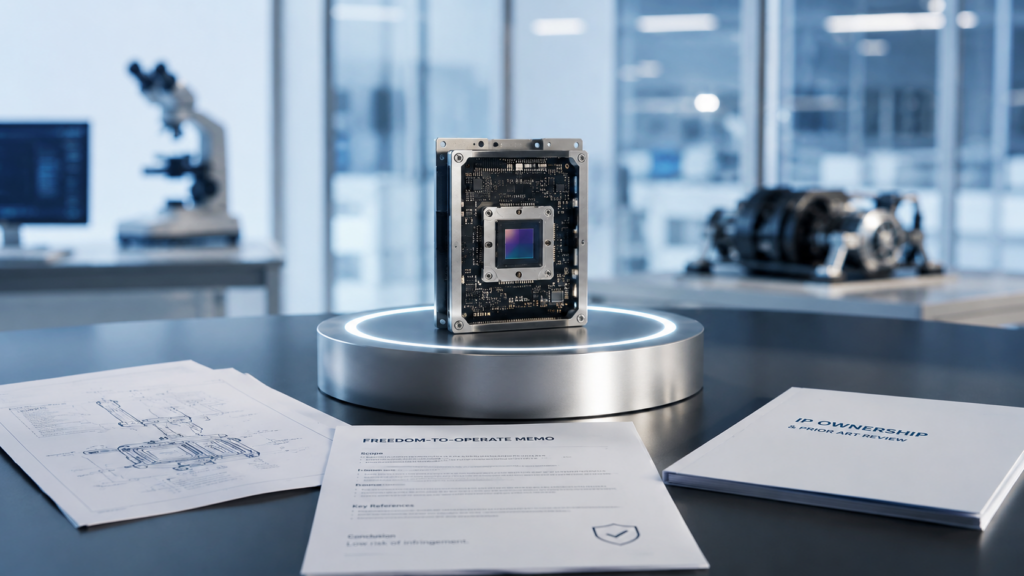
IP insurance is particularly relevant when a company’s value depends significantly on software, patents, data sets, know-how, or other intellectual property rights. This applies primarily to tech, deep-tech, and life sciences companies, but also to private equity and venture capital investors, as well as strategic buyers who wish to acquire, integrate, or protect such assets in their portfolios. M&A attorneys and corporate finance advisors benefit from an early assessment of insurability when IP issues are identified during due diligence as risks relevant to the deal, particularly in cases where the standard W&I warranty reaches its limits.
IP insurance doesn’t just come into play when a loss occurs. Its value is established as early as the risk transfer structuring phase: What IP risks are present, what coverage approach is appropriate, and which provisions are better included in the SPA, in a purchase price adjustment, or in an escrow arrangement? If these issues are clarified before approaching the market, the chances of securing a robust policy increase. At the same time, this helps prevent known IP issues from leading to blanket exclusions, high deductibles, or a refusal to underwrite only during the underwriting process.
This article is intended for general informational purposes only and does not constitute specific legal, tax, or insurance advice. Whether and to what extent insurance coverage is available depends on the specific facts of the case, a legal review, the insurers’ underwriting requirements, and the final terms of the policy.
How does Risk Partners provide support?
We are available on short notice to provide an initial assessment of the insurability, marketability, or structuring of an actuarial solution.
Rufen Sie uns an unter der Nummer +49 160 92598958 oder schreiben Sie uns: dealinsurance@riskpartners.de.