Coverage for financial losses arising from breaches of warranties in a corporate purchase agreement, including certain tax warranties and—depending on the policy structure—tax exemptions, provided these are not excluded as known tax items or require separate structuring. W&I is frequently used to protect buyers, limit seller liability, and reduce escrow or holdback arrangements.

Protection for buyers in transactions where the seller, insolvency administrator, or management does not provide substantial guarantees, and where access to management or disclosure is limited. Synthetic structures decouple buyer protection from recourse against the seller. The underwriting basis is the buyer’s due diligence.
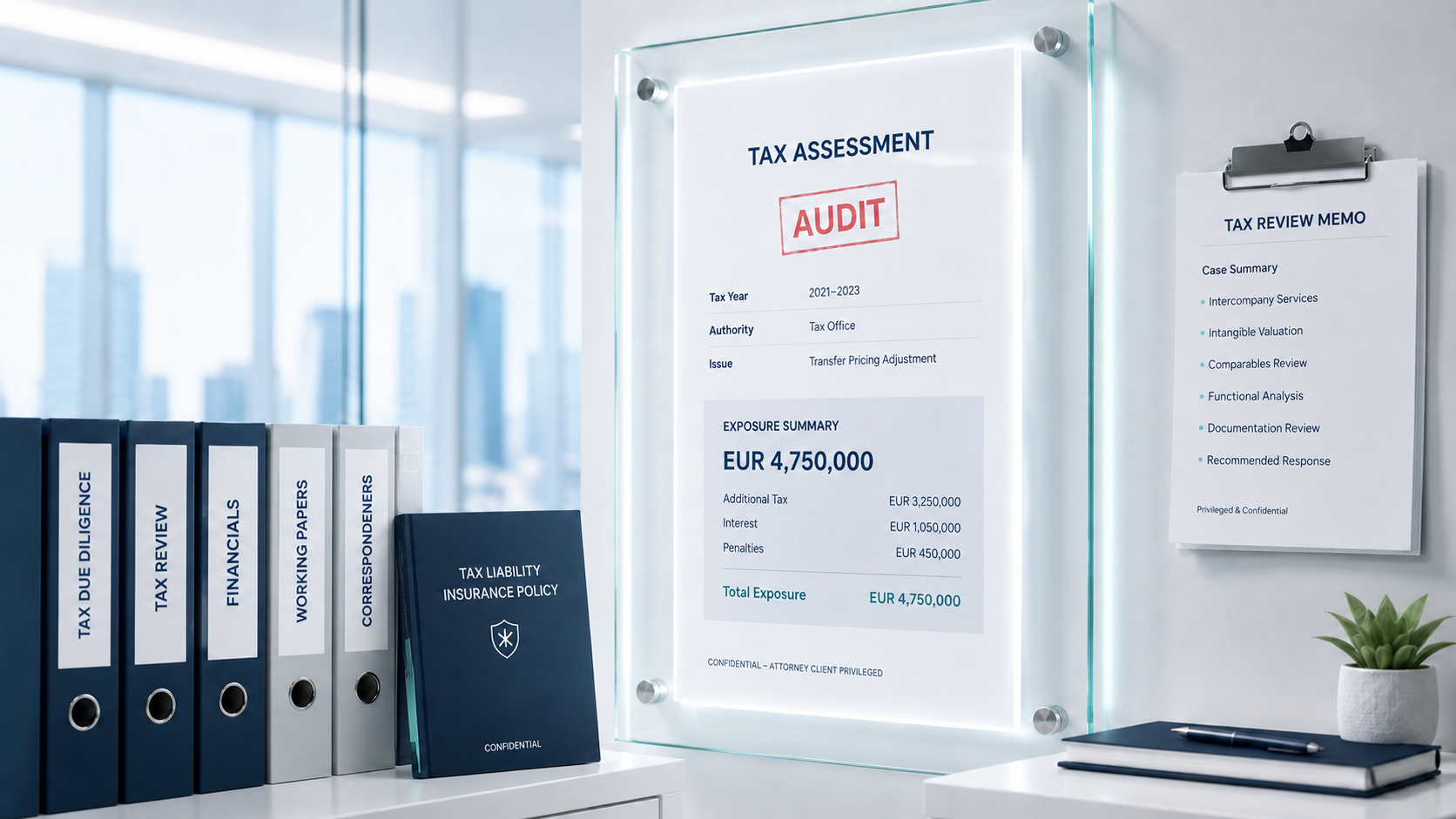
Coverage for specific tax risks, such as those arising from transaction structures, tax audits, reorganizations, cross-border situations, or disputed issues of interpretation. Tax insurance policies can also be purchased independently of specific transactions.

Hedging of known individual risks whose occurrence, magnitude, or legal assessment is uncertain. These include, for example, specific indemnities, W&I exclusions, as well as regulatory, contractual, state aid, or litigious legal risks whose economic impact can be isolated and transferred to the insurance market independently of the rest of the transaction. This typically requires a robust legal, tax, or technical risk assessment and a quantifiable exposure.

Protection against losses arising from defects in ownership, title, or rights of use relating to real estate, real estate companies, or investment structures. Particularly relevant in real estate transactions, complex asset structures, and cross-border matters.

Coverage for environmental, contaminated site, contamination, and remediation risks, including third-party claims and government-mandated remediation orders. Particularly relevant for industrial, infrastructure, energy, and real estate transactions.
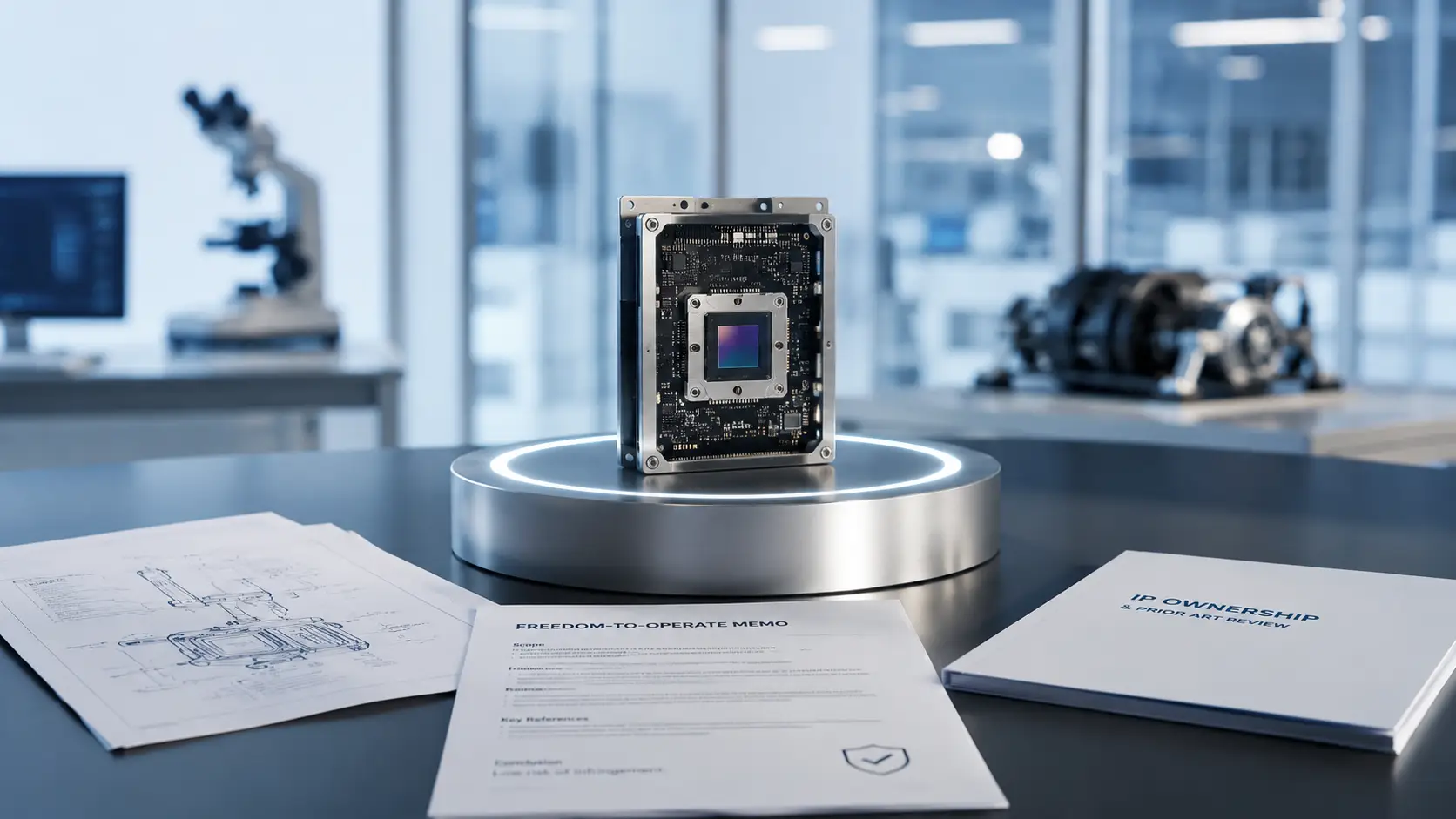
Coverage for risks arising from intellectual property infringements, freedom-to-operate uncertainties, or infringement risks, provided they are legally and technically defined and documented in a manner that allows for underwriting. This is particularly relevant for transactions involving a significant amount of intellectual property, as well as for companies that develop, license, or commercialize patent-protected technologies.
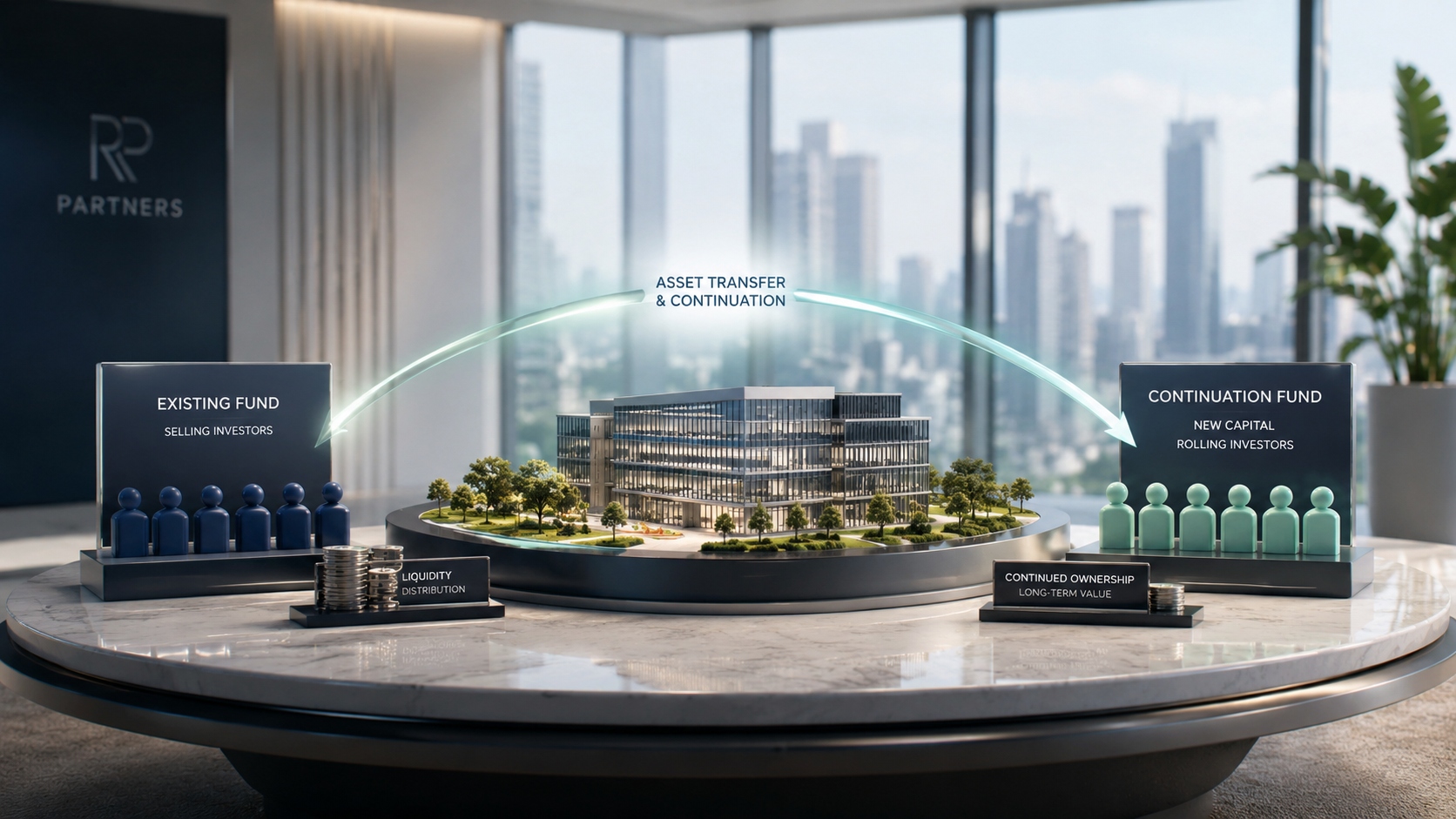
Structuring W&I, tax, contingent risk, and management liability solutions for GP-led secondaries, continuation funds, and secondary buyouts, particularly in cases involving limited seller recourse, LP liquidity, and lead investor protection.

Mitigation of directors’ and officers’ liability risks in connection with a change of control, sale, acquisition, or restructuring. Particular emphasis is placed on run-off solutions for breaches of duty committed prior to closing and the continuity of the management liability structure after closing.
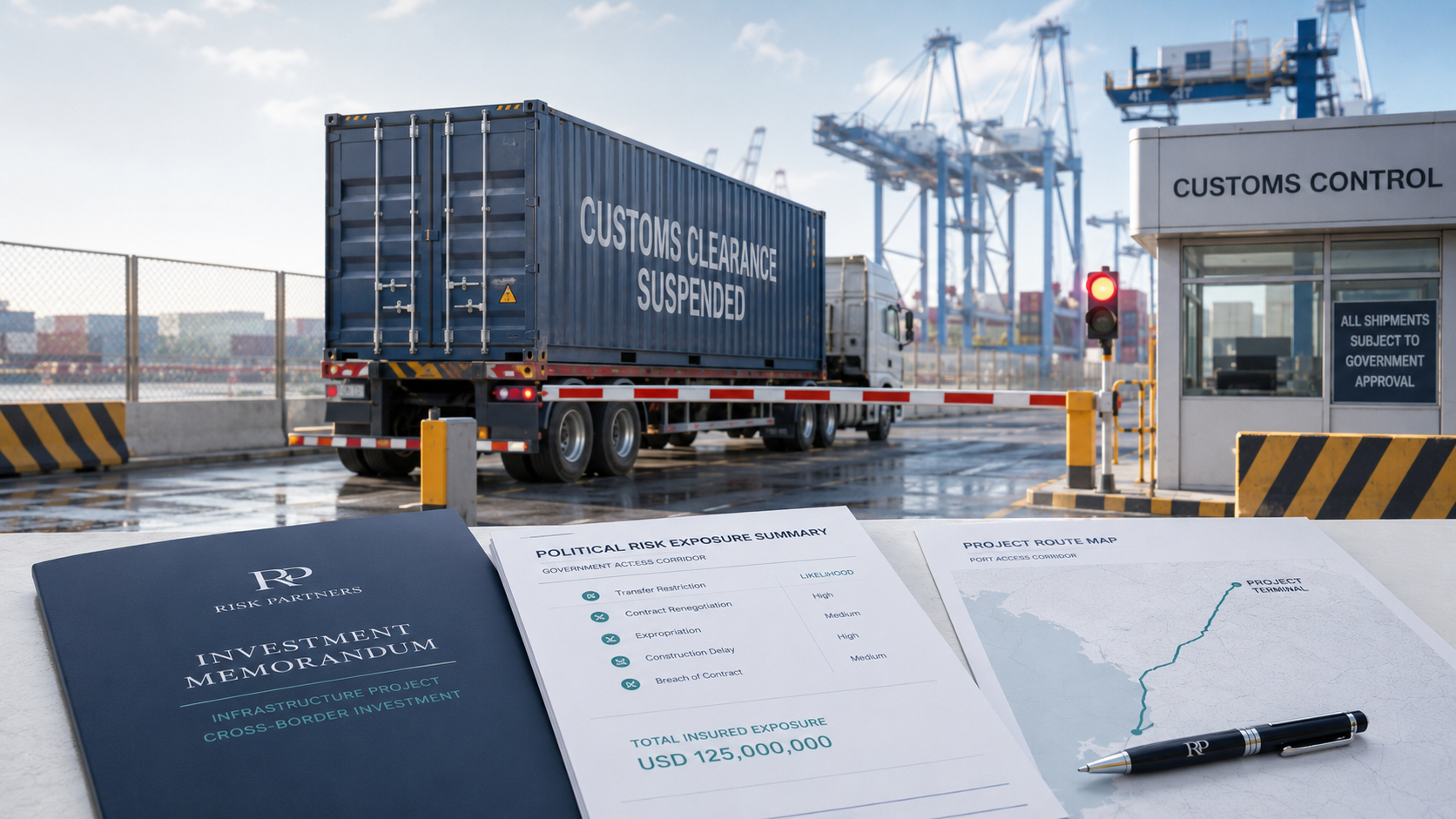
Protection of international investments against political risks such as expropriation, transfer restrictions, currency inconvertibility, political violence, government intervention, or breaches of contract by the government. Relevant for the acquisition or financing of foreign assets, concessions, infrastructure, energy, and regulated projects.
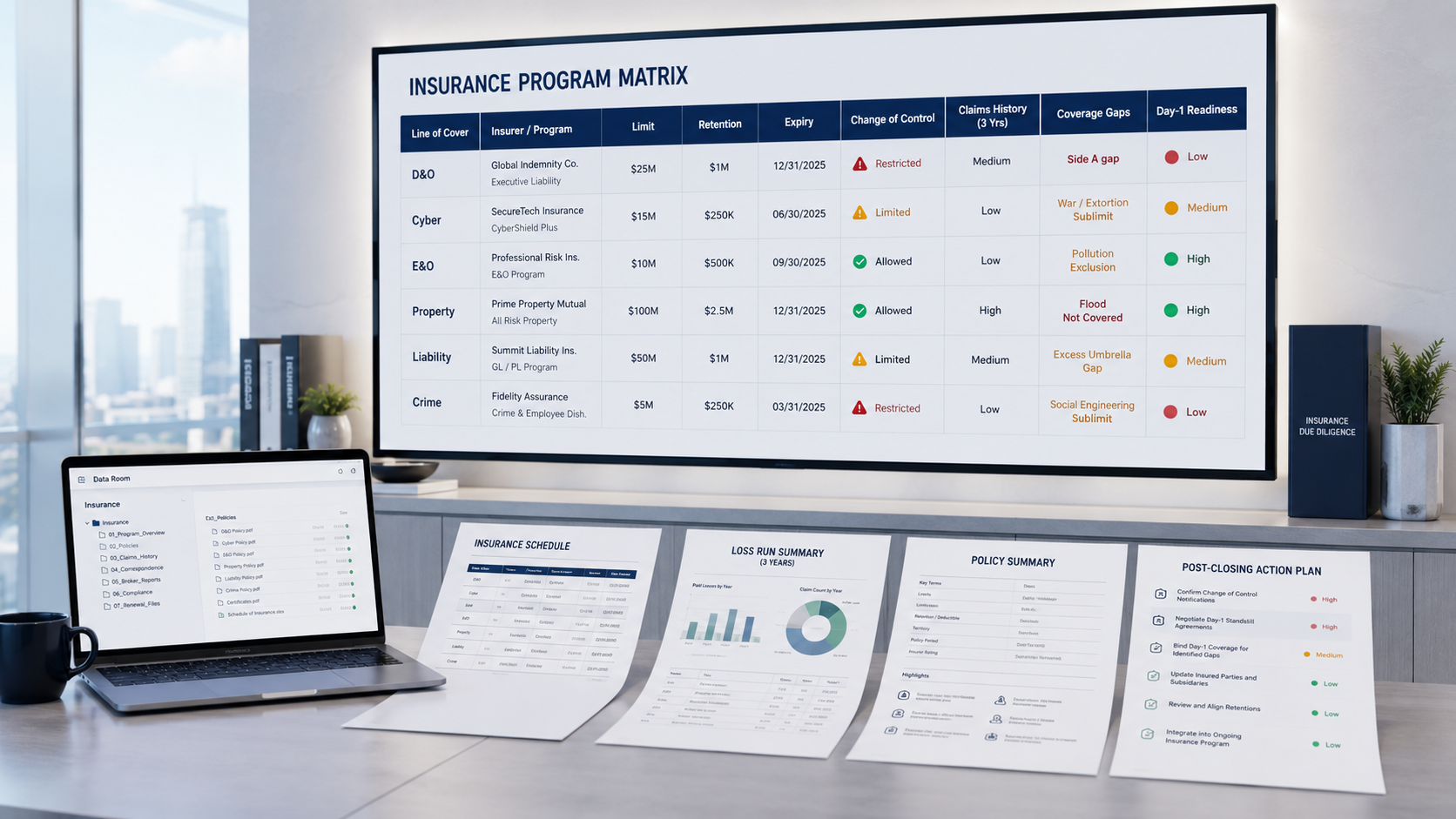
Review of existing insurance programs, claims history, coverage gaps, change-of-control clauses, and the target’s post-closing requirements, including the insurance structure effective from Day 1.

Coordinating insurance-related matters during concurrent M&A and IPO processes, particularly W&I, D&O run-off, management liability, and POSI. The goal is to prepare both exit options from an insurance perspective in such a way that the requirements of the M&A and capital markets processes do not conflict.

Buy-side acquisitions, portfolio exits, buy-and-build strategies, secondary transactions, management rollovers, distressed situations, or fund wind-downs.

Protection against financial losses resulting from breaches of warranty, structuring of identified individual risks, and classification of legacy liabilities, insurance gaps, change-of-control issues, and the target’s post-closing requirements.

Limiting residual liability, reducing tied-up purchase price components, structuring an exit with a reduced liability profile, and securing specific indemnities. For insolvency sales, carve-outs, or distressed assets: evaluating synthetic W&I or alternative indemnification structures.

Acquisition, sale, or financing of equity investments, real assets, international structures, and investments involving complex legal or tax issues.

Early assessment of insurability; coordination of SPA terms, warranty provisions, the disclosure process, W&I exclusions, and underwriting requirements.

Preparing auction processes, obtaining indicative terms, structuring sell-side processes, and providing support for timing, bidder communication, and market outreach.

Providing insurance-related support for restructuring and turnaround processes; assessing insurable risks in debt-to-equity transactions, carve-outs, and asset deals; and coordinating with insolvency administrators and financing parties.
Assessment, structuring, and analysis of specific tax risks for the insurance market, particularly in connection with reorganizations, cross-border structures, tax audits, or disputed issues of interpretation.

D&O run-off, management liability, IPO-related issues, and the ability to maintain the insurance structure after closing.

Transactions involving risks related to intellectual property, data protection, cybersecurity, clinical matters, regulatory issues, product liability, or licensing.

Transactions involving title, environmental, contaminated site, permitting, regulatory, or country-specific risk issues.

Funding rounds, exit readiness, management liability, cyber/E&O, and preparation for capital market- or transaction-related processes.