Risk Partners Life Sciences Roundtable 2025, thank you very much!
Risk Partners Life Sciences Roundtable 2025, thank you very much!
"As an in-house expert for risk management and insurance issues, the requirements of the Executive Board and Supervisory Board are complex. As a former risk and insurance manager at DAX40 companies, I know them well."
Florian Eckstein
Managing Partner, Risk Partners GmbH


Insurance Due Diligence
Insurance Due Diligence of the D&O insurance conditions for adequate coverage of all capital market risks for management and company
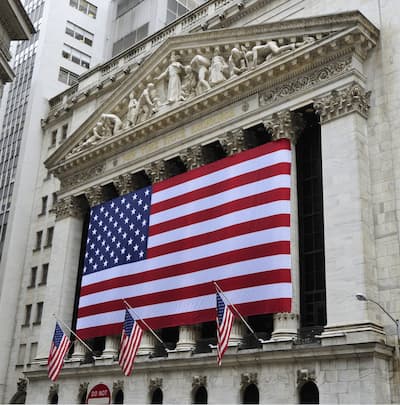
Foreign Filer
(US-Listed)
For foreign filers (US-listed) listed on the NASDAQ or New York Stock Exchange: Special exposure analysis and coaching on capital markets liability under US and EU law

Rent-an-Insurance Manager
Rent-an-Insurance-Manager: We place identified and insurable risks on the global insurance markets for you in the best possible way. However, we know that this does not always solve all your challenges.
Listing on the stock exchange imposes a number of additional obligations on the companies concerned, but also on the management in its responsibility as a representative of the company. This also has a corresponding effect on the liability of the company and also on the personal liability of the managers. The extended area of responsibility is also referred to as consequential obligations under capital market law. Subsequent obligations under capital market law are all obligations of a company that may arise as a result of the issue and trading of securities (e.g. shares, but also bonds or proxy certificates) on stock exchange and over-the-counter capital markets. These include, in particular, disclosure obligations (reporting obligations) and ongoing market conduct rules:
a) With regard to disclosure requirements, IFRS consolidated financial statements (with management report, NFE, annex) must now be prepared in addition to the HGB financial statements and published on the website and in the Federal Gazette shortly after the balance sheet date. Also new is the preparation of a half-yearly financial report, with a condensed management report and annex, which must be published on the website and in the Federal Gazette 60 days after the balance sheet date.
b) The following obligations under the Market Abuse Regulation (MAR), among others, must be complied with and fulfilled:
Who is affected by the Market Abuse Regulation (MAR)?
The MAR (Market Abuse Regulation) was adopted by the European Union in order to create a common level of transparency and investor protection in the capital markets of all member states of the European Union.
Subject to MAR:
This includes all German OTC segments, including the quality segments such as Scale and m:access (Munich Stock Exchange). In addition to shares, other financial instruments such as bonds, options, ETFs, CFDs, credit default swaps and forward transactions are also included in the scope of application.
Stricter sanctions under MAR - What are the specific risks?
Possible risk: you could, for example, fail to fulfill these obligations by the company or the management:
In addition to the new obligations, possible sanctions and fines in the event of a breach of disclosure obligations and insider trading law have also been drastically increased. Even an attempt to manipulate the market is now considered a criminal offense.
In addition, the "naming and shaming" practice has created a further deterrent effect. All sanctions imposed are made publicly accessible for five years on the websites of the respective state authorities (e.g. BaFin), stating the facts of the case and the identity of the persons concerned.
Violations of market manipulation law and insider trading bans
Penalties for natural persons | Up to EUR 5,000,000 |
|---|---|
Penalties for legal entities | Up to EUR 5,000,000 or 15 % of group turnover |
Violations against the handling of insider information
Penalties for natural persons | Up to EUR 1,000,000 |
|---|---|
Penalties for legal entities | Up to EUR 2,500,000 or 2 % of group turnover |
Violations of obligations regarding insider lists, proprietary trading by executives, trading bans for executives
Penalties for natural persons | Up to EUR 500,000 |
|---|---|
Penalties for legal entities | Up to EUR 1,000,000 |
Due to the additional legal and regulatory requirements - as partially outlined above - this also increases the risk of incorrectly or negligently disregarding and breaching one of the aforementioned obligations. Sensitive penalties often apply to natural persons (in particular the management board and supervisory board) as well as the legal entity (company).
In D&O insurance, the increased risk must therefore also bereported to the insurer as part of the so-called "obligations to increase the risk". The "trigger" of the increase in risk in standard D&O policies is often defined as "the first public offering of securities, primary shares or secondary shares as part of an initial public offering (IPO) or secondary public offering (SPO) and the takeover or offer to take over shares as part of a share exchange, a squeeze-out procedure or comparable measures."
There is therefore no automatic insurance cover under D&O insurance for this new risk area of the capital market and the inclusion should be specifically checked by an experienced insurance broker and negotiated with appropriate extensions to the terms and conditions. Not all insurers in Germany insure the D&O risk of a listed company, so there can often be nasty surprises if the insurer's policy prohibits the continuation of the D&O contract and a replacement has to be found under pressure. You should therefore already check in the IPO readiness check whether your D&O is also prepared to offer protection in the context of a stock market listing. The so-called Side C cover within the D&O policy is a necessary extension in order to also cover capital market follow-up obligations and the defense against and indemnification of securities trading claims, such as lawsuits by investors, shareholders, securities class actions and the Capital Model Proceedings Act (KapMuG). Below we explain the basic structure of a D&O insurance policy and how these components interact to provide maximum protection.
D&O insurance is basically structured in three modules (Side A+B+C) and can be taken out and extended on a modular basis, depending on the individual risk profile of the company and the managers involved.
Side ABC policies are generally chosen by listed companies, as this is the established standard for listed companies and provides the best possible cover for all areas of risk for the insured persons, as well as protecting the company's assets.
For cost reasons, however, pure Side A cover can also be taken out for the benefit of the primary interest of the insured persons, or at least from a certain sum insured, the limited scope can now be considered purely for the acting persons. (e.g. first EUR 25 million sum insured with full Side ABC cover and then a further EUR 25 million sum insured only for Side A for extended protection of the private assets of the insured persons; total sum insured EUR 50 million).
Our Managing Director Florian was a guest on the podcast of the life science specialists from Pates and gives valuable tips on the topic of "manager liability".
Building block | Description | Who is insured? | What is covered? |
|---|---|---|---|
Side A | ...pays on behalf of the insured person the loss that is not compensated due to a claim against the insured person | Natural persons (management board, supervisory board, managing director, senior executives, etc.) | Private assets of natural persons from their personal liability |
Side B | ...pays the loss on behalf of the company that is compensated on the basis of a claim against the insured person. (Indemnification / Company Reimbursement) | Legal entity (company) | Balance sheet protection of the company |
Side C | ...pays on behalf of the company for damages caused by a direct claim against the company. Outside the USA and in the case of listed companies in the USA (e.g. foreign filers), this includes the defense and indemnification of securities trading claims, such as lawsuits by investors, shareholders, securities class actions, or in Germany under the Capital Markets Model Case Act (KapMuG). | Legal entity (company) | Balance sheet protection of the company in the context of securities trading claims) |
Not sure whether your D&O insurance also offers comprehensive protection, e.g. for capital market follow-up obligations and the defense and indemnification of securities trading claims, such as lawsuits by investors, shareholders, securities class actions, Capital Markets Model Case Act(KapMuG)? Make an appointment here for a non-binding and free check of your insurance cover for your capital market liability under D&O insurance.
Managers whose company is listed on a US stock exchange such as the NASDAQ or New York Stock Exchange (NYSE) bear a particularly high risk.
What is civil liability under Section 11 of the US Securities Act 1933?
Section 11(a) and (b) of the US Securities Act 1933 provide for strict liability (tort liability ) for issuers who make material misstatements, misrepresentations or omissions of information in the issuance of securities in connection with the disclosure requirements of a public offering of shares, such as an IPO or SPO. Essentially, liability under Section 11 covers errors relating to the prospectus, a private placement memorandum, a registration statement, but also general disclosures, e.g. during a road show, investor conference, etc.
What are the requirements for tort liability under Section 11?
To be liable for a Section 11 violation, the issuer must make a material misstatement or omission of information in the transaction. An individual, such as the directors, may be held liable if the final registration statement (filing documents with the SEC) contains the following:
The special feature of this strict liability is that the plaintiff does not have to demonstrate or prove that he relied on the statement. It is sufficient to prove that the information was incorrect or misleading. The limitation is that the purchaser of the shares must not have known at the time of purchase that the information was incorrect or misleading. Finally, the securities purchased by the plaintiff must be traceable to the relevant registration statement or disclosure document. This requirement is easy to meet in an initial public offering, but may be difficult in subsequent purchases of shares issued in private offerings.
Who is potentially liable?
The Issuer is potentially liable under Section 11. In addition, Section 15 makes any person or company controlling an Issuer potentially liable. This provision provides for joint and several liability for the controlling person or company in accordance with the principles of agency. Liability also extends to those who sign their name to confirm the truthfulness of the information (signatory/representative). This generally leads to potential liability for company directors (management board and supervisory board), underwriters and others involved in the preparation of the registration statement or prospectus. Any signatory can rely on their duty of care, although it will be difficult for a CEO and CFO who are insiders to raise this defense. The due diligence defense relates to the effort and care the signatory exercised in verifying the misstatements or omissions. Section 11(e) provides for rescission of the transaction (together with interest) or compensation for damages (loss) suffered as a result of the subsequent sale of the securities.
How high is your "exposure" as a board member of a foreign filer? - Calculation of the Securities Class Action Exposure (SCA) Exposure
The special liability situation and public scrutiny of securities class actions does have one advantage - namely a high level of transparency of the lawsuits and their outcome. In contrast to many other jurisdictions, the data on securities class actions (SCA) is published in the USA. It is therefore very easy to analyze,
Sidenote for our German IPO mandates: we also try to provide you with a sound basis for decision-making with benchmarks and evaluations from our claims database.
Securities Class Action (SCA) Exposure calculation | ||||
|---|---|---|---|---|
Scenario 50 % price slide | Share price | Market Cap | ||
Starting course | $ 15.50 | $ 77.500.000 | ||
Price slide to | $ 7.75 | $ 38.750.000 | ||
Total ADS outstanding | 5.000.000 | |||
Less "friendly" shares | (1.500.000) | |||
Potential "critical" shares | 3.500.000 | |||
Price slide per share | $7.75 | |||
Potential securities class Action exposure | $ 27.125.000 | |||

50 % percentile | 75 % percentile | 85 % percentile | |
|---|---|---|---|
Potential SCA exposure | $27.125.000 | ||
Comparison ratio (SCA) | 18,40 % | 34,70 % | 51,30 % |
Estimated comparative value | $ 4.991.000 | $ 9.412.375 | $ 13.915.125 |
Expected SCA Defense costs | $ 2.000.000 | $ 3.000.000 | $ 4.000.000 |
Total SCA potential (estimated) | $ 7.000.000 | $ 12.500.000 | $ 18.000.000 |
Budget for "linked" claims | $ 3.000.000 | $ 4.000.000 | $ 5.000.000 |
Complete Damage potential | $ 10.000.000 | $ 16.500.000 | $ 23.000.000 |
We can discuss your desired level of security with you in detail. Should the sum insured in your D&O insurance program be based on a loss event that statistically occurs every two, five, ten, twenty or Y years? You can also base your reserve planning for potential disputes on this.
Blog / News
